
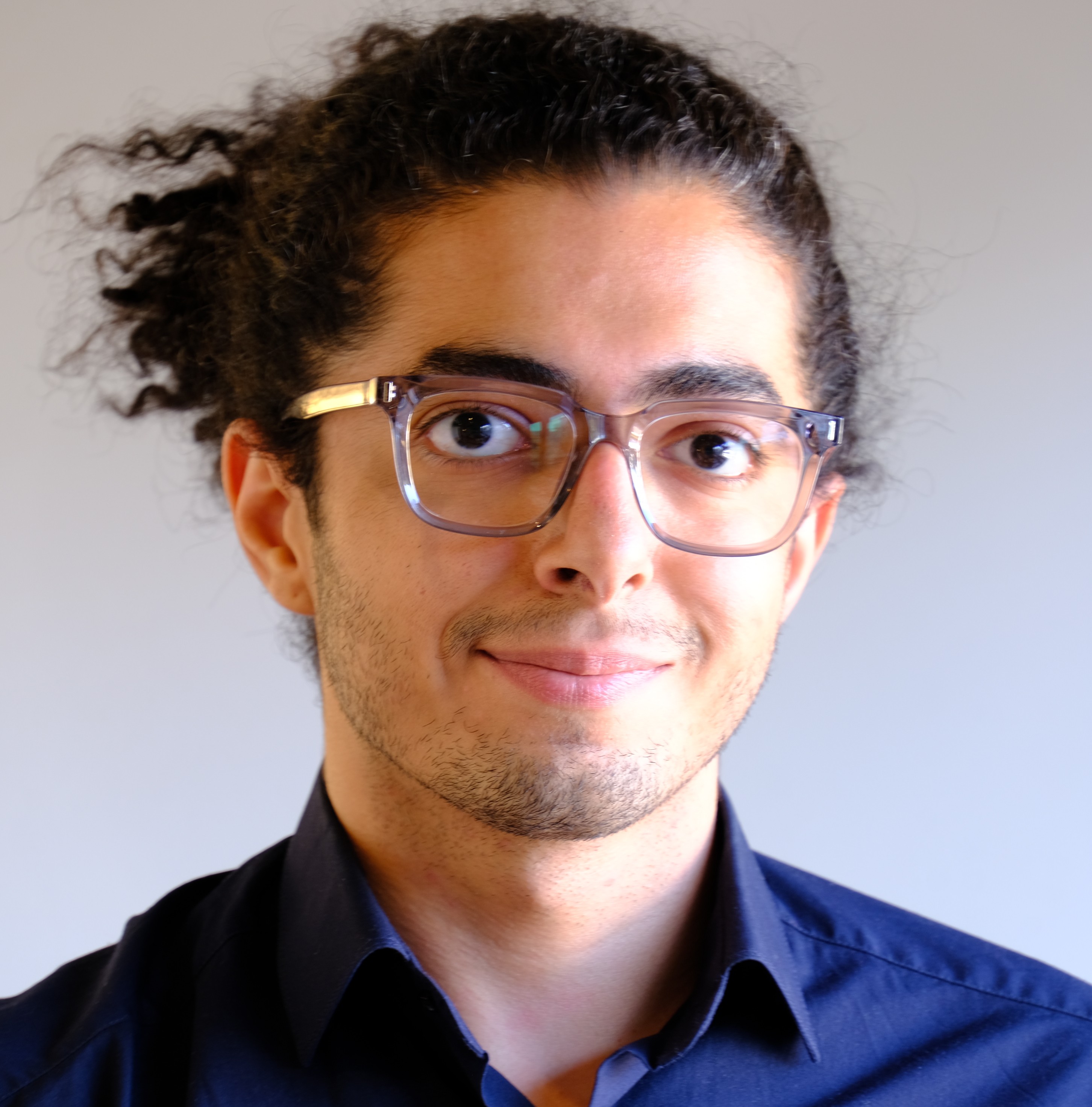

Ali Piri received his PhD from École Centrale de Lyon, France, as part of the Marie Skłodowska-Curie APROPOS project. His doctoral research focused on approximate computing and energy-efficient AI hardware, with particular emphasis on design-space exploration, approximate arithmetic circuits, and the use of approximate computing in deep neural network accelerators.
He is currently a Director of Research at the Nanonetworking Center in Catalunya (N3Cat), Universitat Politècnica de Catalunya (UPC). His current research focuses on in-memory computing and emerging computing technologies and architectures, including computing systems based on novel devices and 2D materials. His broader research interests include energy-efficient computer architectures, AI hardware, peripheral circuit design, and cross-layer optimization from devices and circuits to computing architectures.
Ali Piri received his PhD from École Centrale de Lyon, France, as part of the Marie Skłodowska-Curie APROPOS project. His doctoral research focused on approximate computing and energy-efficient AI hardware, with particular emphasis on design-space exploration, approximate arithmetic circuits, and the use of approximate computing in deep neural network accelerators.
He is currently a Director of Research at the Nanonetworking Center in Catalunya (N3Cat), Universitat Politècnica de Catalunya (UPC). His current research focuses on in-memory computing and emerging computing technologies and architectures, including computing systems based on novel devices and 2D materials. His broader research interests include energy-efficient computer architectures, AI hardware, peripheral circuit design, and cross-layer optimization from devices and circuits to computing architectures.
Ali Piri received his PhD from École Centrale de Lyon, France, as part of the Marie Skłodowska-Curie APROPOS project. His doctoral research focused on approximate computing and energy-efficient AI hardware, with particular emphasis on design-space exploration, approximate arithmetic circuits, and the use of approximate computing in deep neural network accelerators.
He is currently a Director of Research at the Nanonetworking Center in Catalunya (N3Cat), Universitat Politècnica de Catalunya (UPC). His current research focuses on in-memory computing and emerging computing technologies and architectures, including computing systems based on novel devices and 2D materials. His broader research interests include energy-efficient computer architectures, AI hardware, peripheral circuit design, and cross-layer optimization from devices and circuits to computing architectures.